
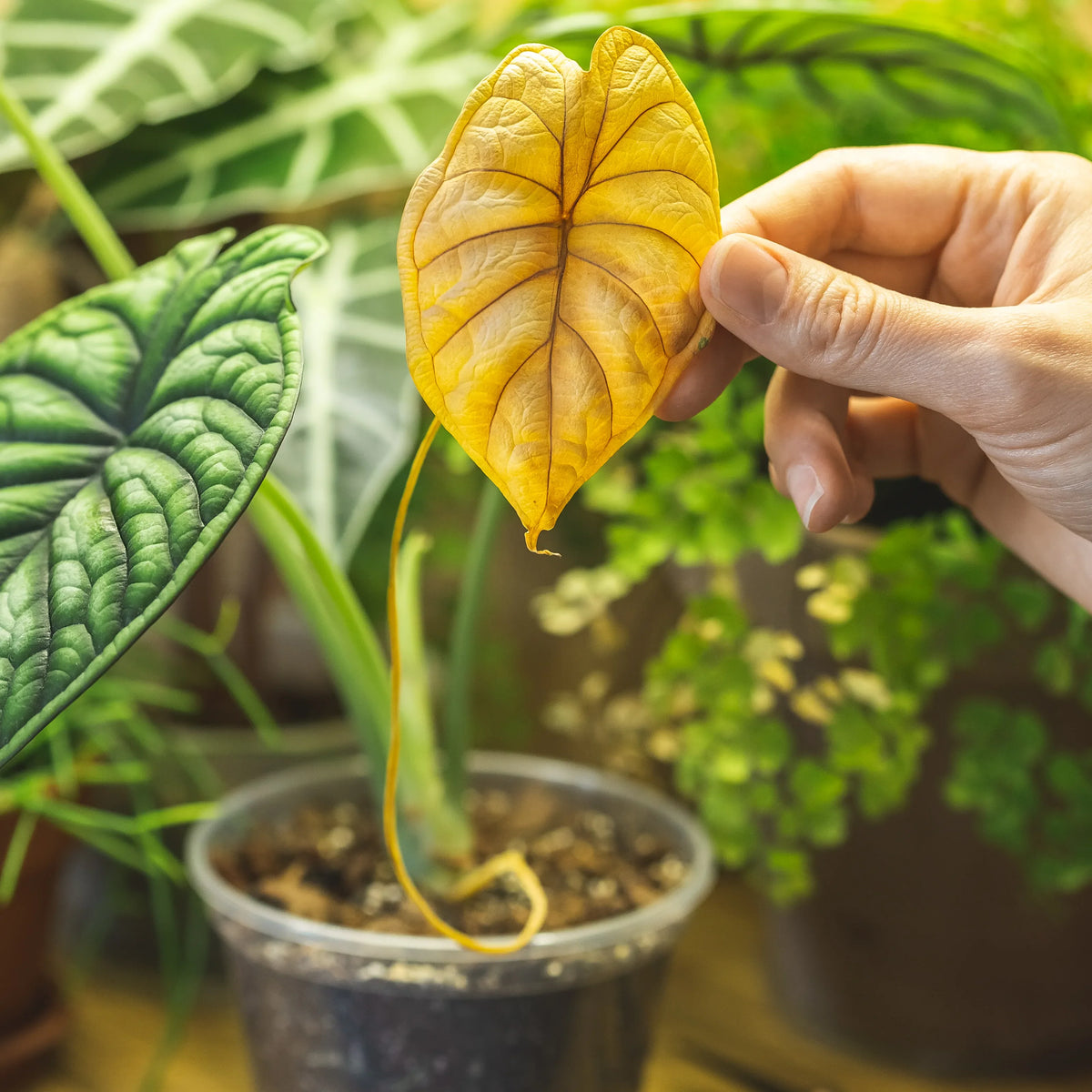
Finding a yellow leaf on a favourite plant can be worrying, but yellowing is a symptom rather than a diagnosis. It may be part of normal ageing, or it may signal a problem with watering, light, roots, nutrition or pests. Look at the pattern and the plant’s growing conditions before reaching for fertiliser.
1. Check the watering pattern first
Overwatering is a common cause of yellow leaves in container plants. When the mix stays saturated, roots may receive too little oxygen and begin to function poorly. Signs can include persistently wet soil, a heavy pot, soft stems and several yellowing leaves. Let the upper layer of the mix dry to the degree appropriate for that plant, check that drainage holes are clear and empty standing water from saucers.
Underwatering can also cause yellowing, often alongside dry, crispy edges, drooping and a very dry potting mix. Water thoroughly when the plant needs it rather than giving frequent tiny splashes.
2. Consider the light
A plant receiving much less light than it needs may shed older leaves or develop pale growth. Conversely, intense direct sun can scorch foliage, especially after a plant is moved suddenly from shade. Match the plant to the available light and make changes gradually.
3. Look for nutrient issues—but do not guess
Nutrient deficiencies can cause characteristic patterns. For example, some deficiencies affect older leaves first, while others show on newer growth. However, poor roots, unsuitable soil pH and waterlogged mix can prevent nutrient uptake even when nutrients are present. Correct the growing conditions first. If the plant is actively growing and the mix is depleted, use a balanced fertiliser according to its label.
4. Inspect for pests
Check leaf undersides, stems and new growth for tiny insects, webbing, sticky residue or stippled marks. Isolate a plant with a suspected infestation and identify the pest before choosing a treatment. Avoid applying several products at once.
5. Remember natural ageing
It is normal for a plant to lose an occasional older, lower leaf as it grows. If the rest of the plant looks healthy and new growth is normal, removing that leaf may be all that is needed.
A simple diagnosis checklist
- Is the soil staying wet for many days, or becoming bone dry?
- Are several leaves affected, or only one old lower leaf?
- Is yellowing concentrated between veins, at the edges or across the whole leaf?
- Has the plant recently been moved, repotted or exposed to stronger sun?
- Can you see pests or signs of root trouble?
What not to do
Do not automatically add fertiliser, water more, or repot at the first yellow leaf. Changing several things at once makes it difficult to learn what helped and may add stress. Make one evidence-based adjustment and observe new growth over the following weeks.
Frequently asked questions
Should I cut off yellow leaves?
Remove fully yellow or damaged leaves with clean scissors. A partly yellow leaf may still be useful to the plant, so you can wait unless it is diseased or decaying.
Can yellow leaves turn green again?
Fully yellow leaves usually do not regain their colour. Focus on correcting the cause and protecting healthy new growth.
Helpful plant-care essentials
Once you have identified what your plant needs, explore our plant collection, solid plant nutrition and soil amendments, and liquid plant-care products. Avoid treating yellow leaves with fertiliser until you have checked watering, light and root health.
Products that can help with specific plant-care tasks
If the mix has compacted or needs refreshing, explore Potting Soil. A 2-litre water sprayer can help with controlled watering and routine plant care. If you identify a pest problem, consider Neem Oil only where appropriate and strictly according to its label—do not use it as a general treatment for unexplained yellow leaves.