
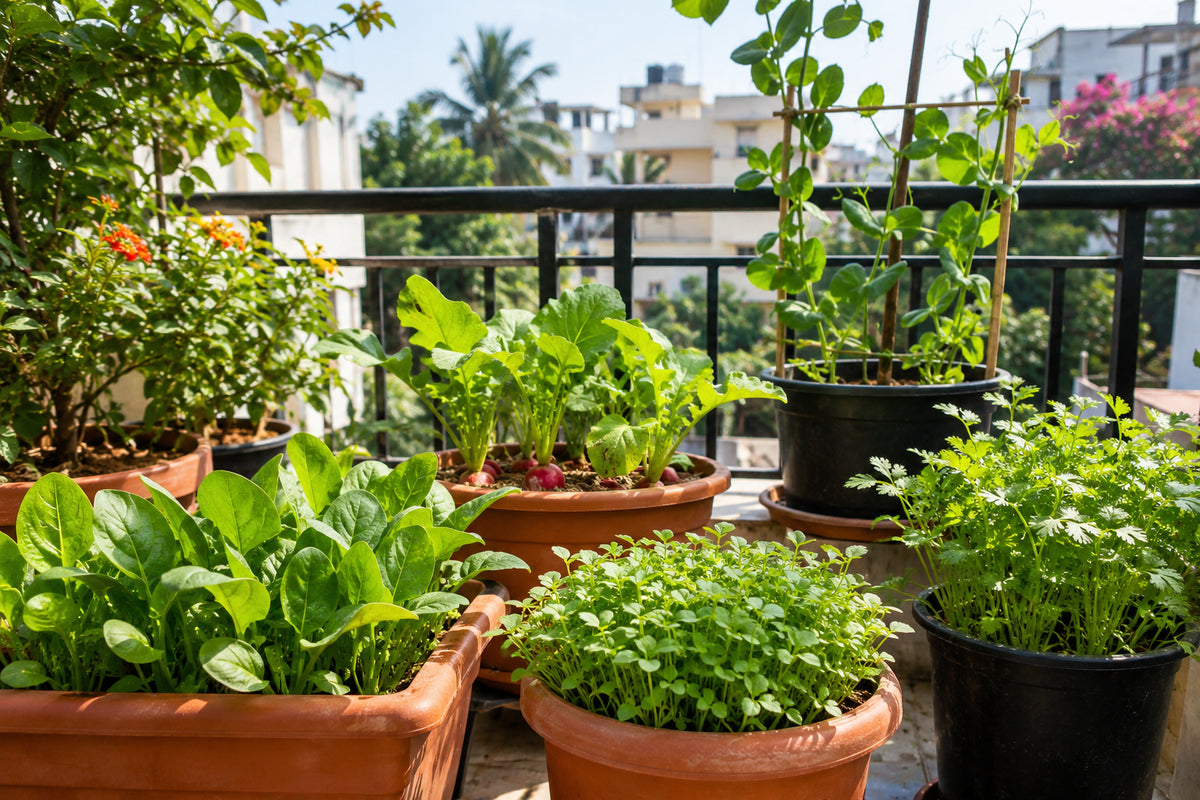
November is a lovely month to get a small kitchen garden started in Bengaluru. The intense monsoon period has eased, the days are generally comfortable for working outdoors, and the cooler nights suit several leafy greens and root vegetables. You do not need a terrace or a large backyard: a sunny balcony with a few well-drained containers is enough to begin.
If you are wondering what to plant in Bengaluru in November, start with spinach (palak), fenugreek (methi), coriander, radish, beetroot and carrots. Choose crops that match the depth of your pots and the sunlight your balcony receives. Here is a practical guide to getting them going.
1. Spinach (Palak): an easy first leafy green
Spinach is a good choice for a beginner because you can harvest the outer leaves as the plant grows. Sow seeds directly in a wide container around 15–20 cm deep. Cover them lightly with growing medium, keep the surface evenly moist while they germinate, and thin crowded seedlings so air can move between plants. Give the pot around 4–5 hours of sunlight if possible. Pick outer leaves rather than pulling up the whole plant for a longer harvest.
2. Fenugreek (Methi): quick and useful in the kitchen
Methi grows well in a shallow, wide trough, making it ideal when balcony space is limited. Scatter seeds fairly evenly, cover with a thin layer of mix and water gently. Once seedlings appear, thin them lightly if they are packed too closely. You can harvest tender leaves in roughly 3–5 weeks, depending on conditions. Sow a small new batch every couple of weeks instead of filling every pot at once.
3. Coriander (Dhaniya): sow in small batches
Coriander prefers a container with good drainage and a spot that gets morning sun. Sow seeds directly where they will grow; coriander can sulk when its roots are disturbed. If using whole coriander seeds, gently split them into halves before sowing to help water reach the seed. Keep the mix moist but never waterlogged. Succession sowing every 2–3 weeks helps you avoid having all your coriander ready at the same time.
4. Radish: a rewarding root crop for pots
Radish is one of the more forgiving root vegetables for a home garden. Choose a variety suited to your local climate and a container at least 25–30 cm deep for longer roots. Sow seeds directly, then thin seedlings to give each root room to develop. Use loose, stone-free growing medium; compact soil can produce misshapen roots. Keep moisture reasonably consistent, because repeated drying and heavy watering can affect root quality. Depending on the variety, radishes may be ready in around 30–45 days.
5. Beetroot: colour and leaves from one pot
Beetroot can be grown in a deep, wide container, ideally around 25–30 cm deep. Sow seed clusters directly and thin the seedlings after they emerge, leaving enough room for the roots to swell. The young leaves can also be used as greens. Avoid pushing the plants with excess nitrogen-rich feed; focus on a loose medium, steady moisture and good light. Harvest timing varies by variety, so use the seed packet as your guide.
6. Carrots: give the roots enough depth
Carrots need more planning than leafy greens. Select a short or container-friendly variety and use a pot at least 30 cm deep, filled with fine, loose medium without stones or hard clumps. Sow thinly in place rather than transplanting seedlings, then thin carefully once they establish. A shallow pot or compacted mix can lead to short or forked roots. Carrots take longer than leafy greens, so be patient and keep the container evenly moist.
Set up your balcony pots properly
- Sunlight: Aim for at least 4–6 hours of direct light for most of these crops. If your balcony gets less, prioritise leafy greens and observe how quickly the mix dries.
- Drainage: Every pot needs open drainage holes. Raise containers slightly if water tends to collect underneath them.
- Growing medium: Use a light, crumbly mix that holds some moisture but drains freely. A blend of garden soil, mature compost or vermicompost, and a moisture-retaining material such as cocopeat can work; adjust it so it does not become dense or soggy.
- Feeding: Mix a modest amount of mature compost or vermicompost into the medium before sowing. Once plants are established, feed lightly according to their growth rather than adding large quantities at every watering.
- Watering: Check the top layer of the mix with your finger. Water when it begins to feel dry, and water thoroughly enough to reach the roots. Do not follow a fixed daily schedule; sun, wind, pot size and plant age all change how quickly a pot dries.
- Spacing: Thin seedlings. A crowded pot may look lush at first, but plants compete for light, air, water and root space.
A simple 4-pot starter plan
If you are starting from scratch, keep it manageable: use one wide trough for spinach, one for methi and coriander (in separate sections), one deeper pot for radish, and one deep container for beetroot or a short carrot variety. Sow only a portion of each seed packet. You can always add more once you understand how much sun your balcony receives and how quickly your containers dry out.
Common November balcony-gardening mistakes
Do not choose a crop only because it is labelled a winter vegetable; Bengaluru is milder than many North Indian growing regions, and varieties and microclimates matter. Avoid transplanting root crops that should be direct-sown, using shallow pots for long roots, or keeping trays constantly wet. Watch the leaves for aphids and caterpillars, inspect the undersides regularly, and remove affected leaves early. If growth is slow, check sunlight, drainage and spacing before adding more fertiliser.
Get your balcony garden ready with eNGe
Good containers and a healthy growing medium make kitchen gardening easier. Explore eNGe pots and planters for containers in different sizes, and browse plants and gardening essentials. For your growing medium, see eNGe vermicompost and cocopeat. If you would like help choosing pots or planning a small balcony setup, visit the eNGe Plant Experience Centre in HSR Layout, Bengaluru.
Seasonal note: Planting windows vary with the seed variety, balcony orientation and local weather. Start with a few pots, follow the seed packet for variety-specific spacing and maturity, and adjust watering to the actual moisture in your containers.