
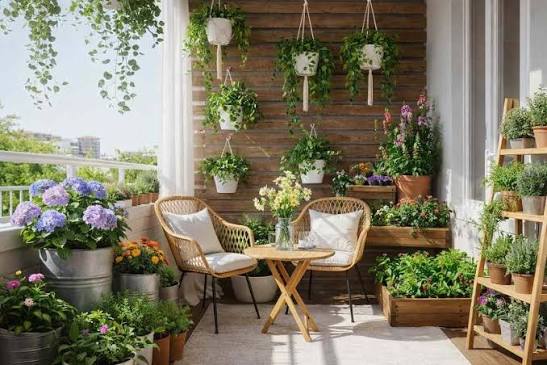
A balcony can become a productive, calming green space, even if you have room for only a few pots. The easiest way to begin is to understand your balcony’s light, wind and drainage before buying plants. Bengaluru’s generally moderate climate makes many kinds of balcony gardening possible, but the conditions can vary considerably between a shaded apartment balcony and one exposed to strong afternoon sun.
Start by observing your balcony
Spend two or three days noticing how sunlight moves across the space. A balcony receiving several hours of direct sun can support many flowering plants and herbs. Bright indirect light is better for plants such as pothos and peace lily. Also check whether wind dries pots quickly and whether rainwater can drain away safely.
Choose containers with drainage
Use pots with drainage holes and saucers where appropriate, but do not let pots sit in stagnant water. Larger containers usually hold moisture more steadily than very small ones. Choose a size that gives the plant room to grow without making the balcony difficult to move around.
Pick plants for the light you actually have
- Sunny balconies: consider hibiscus, bougainvillea, portulaca and suitable herbs.
- Bright, partly shaded balconies: try spider plants, syngonium, money plant and many ferns, depending on humidity and airflow.
- Shadier corners: choose shade-tolerant foliage plants, while remembering that very low light can still limit growth.
Start with three to five plants rather than filling every corner immediately. Learn how each responds before expanding.
Use a suitable potting mix
Balcony pots need a mix that holds enough moisture for roots while allowing excess water to drain. A balanced container mix may include a quality base, a moisture-retaining component such as cocopeat and an aeration component. The exact blend depends on the plant and the materials available. Avoid using dense garden soil by itself in containers because it can compact and drain poorly.
Build a simple care routine
Check the soil before watering rather than following a rigid daily schedule. Water thoroughly when the plant’s needs and soil condition indicate it is time, and allow excess water to escape. Remove dead leaves, inspect the undersides of foliage for pests and rotate pots occasionally if growth leans towards the light.
Common beginner mistakes
- Buying plants before checking the balcony’s light.
- Watering every pot on the same schedule.
- Using containers without drainage holes.
- Overcrowding plants and restricting airflow.
- Adding fertiliser to stressed or dry roots without checking the cause of the problem.
Make the space your own
Use vertical shelves or railing planters only where they can be secured safely and do not obstruct drainage or walkways. Group plants with similar light and watering needs. A small, well-maintained balcony garden is more rewarding than a crowded collection that is difficult to care for.
Frequently asked questions
Can I start a balcony garden with no gardening experience?
Yes. Begin with a few resilient plants suited to your light conditions and learn their watering needs before adding more.
How often should balcony plants be watered in Bengaluru?
There is no single schedule. Check the soil, pot size, plant type, season and exposure. Rainy periods and hot, windy days can change how quickly pots dry.
Find plants and supplies for your balcony
Explore our plants, browse ceramic pots and plastic pots, and find practical gardening tools to help care for your balcony garden.
Useful products to get your balcony garden started
Start with a resilient Money Plant for a bright, indirect-light spot. For containers, explore the practical Nursery Pot range. You can improve moisture retention in a suitable potting blend with Cocopeat.