
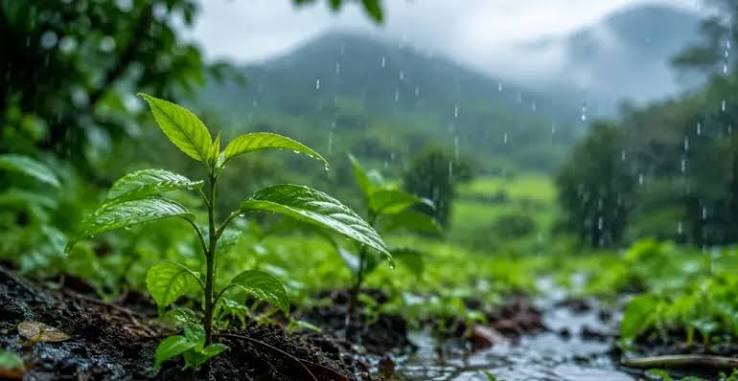
Rain can refresh a garden, but prolonged wet weather also changes how container plants behave. In Bengaluru, a pot that needed frequent watering during a dry spell may remain damp for days during the monsoon. The key is not to stop caring for plants, but to adjust watering, drainage and monitoring to the weather.
Check drainage before the rains intensify
Make sure every container has open drainage holes. Raise pots slightly if they sit directly on a surface where water collects, and clear leaves or debris from balcony drains. Do not allow pots to stand in water-filled trays. If a container repeatedly floods, move it to a sheltered spot and review the potting mix and drainage.
Change your watering routine
Do not water automatically because it is part of your daily routine. Check the mix first. Rain may have watered a pot more thoroughly than expected, while a sheltered plant may remain dry. Water only when the plant and soil condition call for it.
Give plants airflow and suitable shelter
Group plants with enough space for air to move between leaves. Move delicate plants away from strong wind and driving rain. Some plants enjoy rainfall, while others with soft foliage or sensitive flowers may be damaged by heavy downpours. Avoid keeping foliage continuously crowded and wet.
Watch for fungal problems and pests
Remove decaying leaves and inspect stems, leaf undersides and the soil surface. Persistent moisture can encourage fungal issues, while sheltered damp corners may attract pests. Water at the soil level when possible and avoid unnecessary wetting of foliage late in the day. Identify a problem before choosing a treatment.
Support plants and protect the roots
Check that taller plants are stable and secure climbers to suitable supports. Heavy rain can compact exposed potting mix or wash it out of containers. Top up lost mix carefully, without burying the plant’s stem or crown. If roots are exposed, restore a suitable growing medium and check that water can still drain freely.
After a spell of heavy rain
- Empty standing water from saucers and outer pots.
- Check that drainage holes are not blocked.
- Remove fallen or rotting leaves.
- Look for leaning stems, broken branches and washed-out mix.
- Wait for the soil to reach an appropriate moisture level before watering or feeding.
Should you fertilise during the monsoon?
Do not feed plants simply because it is raining. If a plant is actively growing and its roots are healthy, follow the fertiliser label and use an appropriate rate. Avoid feeding waterlogged, damaged or dormant plants. Good drainage and healthy roots matter more than extra fertiliser.
Frequently asked questions
Can I leave all my plants in the rain?
No. Plant tolerance varies. Protect delicate foliage, newly repotted plants and species that prefer more controlled moisture from prolonged heavy rain.
Why are my plants yellowing during the monsoon?
Constantly wet soil and reduced root oxygen are common possibilities, but light changes, pests and natural leaf ageing can also contribute. Check the whole plant and its growing conditions.
Useful supplies for rainy-season plant care
Explore gardening tools, browse soil amendments and plants suited to your space. Check drainage and plant needs before adding any product to your routine.
Products for maintaining healthy pots through the rains
For container mixes that need more aeration, explore Perlite. If heavy rain has washed out or compacted the growing medium, Potting Soil can help when refreshing a pot. Use a 2-litre water sprayer for controlled watering when rainfall has not reached sheltered plants.