
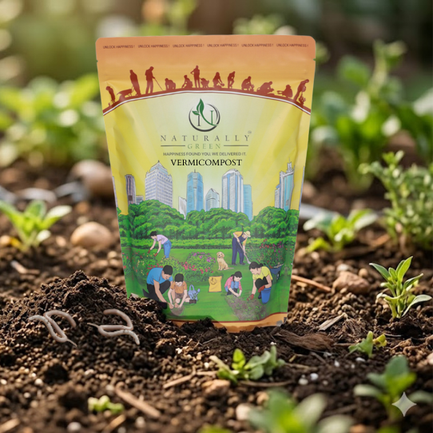
Vermicompost is a natural soil conditioner made from organic material processed by earthworms. For potted plants, it can help improve the growing medium and add organic matter. The trick is to use it as part of a balanced plant-care routine—not as a substitute for good drainage, suitable light or careful watering.
Why use vermicompost in pots?
- Adds organic matter: It helps enrich the potting medium and supports a healthier soil environment.
- Supports soil structure: Used in a suitable mix, it can help the medium hold moisture while remaining workable.
- Feeds the soil gradually: It contributes nutrients and organic matter, though the exact nutrient content varies by source and batch.
- Useful for many garden plants: It can be used with foliage plants, flowering plants, herbs and many vegetables grown in containers.
How to apply vermicompost to an established potted plant
- Check the pot first. Make sure it has drainage holes and that excess water can escape. Do not use compost to compensate for a waterlogged pot.
- Loosen only the surface. Gently remove dry leaf litter and loosen the top layer without disturbing the plant's roots.
- Add a thin top-dressing. Spread a modest, even layer of mature vermicompost over the surface, keeping it a little away from the stem or crown.
- Mix lightly. Work it into just the top layer if you can do so without damaging roots. For shallow-rooted plants, leave it as a surface dressing.
- Water appropriately. Water gently if the plant's normal watering schedule calls for it. Avoid keeping the pot constantly wet.
There is no single dose that suits every pot. The amount depends on pot size, plant type, existing potting mix and the compost itself. Start with a light application, follow the product label and observe how the plant responds before repeating.
Can you mix vermicompost into potting mix?
Yes. When preparing a fresh potting mix, vermicompost can be included as one component alongside materials that provide structure and aeration. A container mix should not be made entirely of compost: too much fine organic material can make the mix dense and slow-draining, especially in a pot that is watered frequently.
For many indoor plants, aim for a loose, airy mix suited to the plant's needs. Plants that prefer a drier root zone need a faster-draining blend than plants that enjoy more consistent moisture. Always check that the finished mix drains freely.
When should you apply it?
Apply during active growth, when the plant is producing new leaves or shoots. Avoid heavy feeding when a plant is stressed, severely wilted, recently repotted or resting. If you have just repotted with a nutrient-rich mix, give the plant time to settle before adding more amendments.
Common mistakes to avoid
- Adding too much: A thick layer can hold excess moisture and may encourage fungus gnats or surface mould in poorly ventilated conditions.
- Piling it against the stem: Keep the stem base and crown clear.
- Ignoring drainage: Good drainage and sensible watering matter as much as the amendment you add.
- Expecting instant results: Compost improves the growing medium over time; it will not fix inadequate light, pests, root rot or incorrect watering.
- Using unfinished material: Use mature, well-processed compost with an earthy smell, not material that is hot, foul-smelling or visibly decomposing.
Vermicompost and other plant-care essentials
Vermicompost is one part of plant nutrition. Depending on your plants and growing conditions, you may also need a suitable potting medium, careful watering and a balanced feeding routine. Explore organic soil amendments and solid plant nutrition, browse liquid plant-care products, or find a plant that suits your space in our plant collection.
Quick questions
Can I use vermicompost for indoor plants?
Yes. Use a light top-dressing or mix a modest amount into a fresh potting medium. Avoid over-applying it, especially in low-light rooms where the potting mix dries slowly.
Can vermicompost burn plant roots?
Mature vermicompost is generally gentler than concentrated synthetic fertilisers, but quality and nutrient content vary. Use a modest amount, avoid direct contact with delicate roots and follow the supplier's directions.
Should I replace my potting mix with vermicompost?
No. Vermicompost is an amendment, not a complete container mix. Combine it with materials that provide aeration and drainage, and choose the blend according to the plant.
At eNGe, we believe healthy plants start with a growing medium that suits them. Make small, thoughtful changes, observe your plants and adjust care to their response.
Explore related gardening essentials
For more on soil health, browse our solid fertilisers and soil amendments, explore liquid plant nutrition, or find plants for your space in our plant collection. Choose amendments according to your plant’s needs and always follow the product directions.
Shop the products mentioned in this guide
Use Naturally Green Vermicompost as a modest soil amendment, and combine it with Cocopeat when preparing a suitable growing medium. For a ready-made base, see Potting Soil. Always adjust the mix to the plant and follow product directions.