
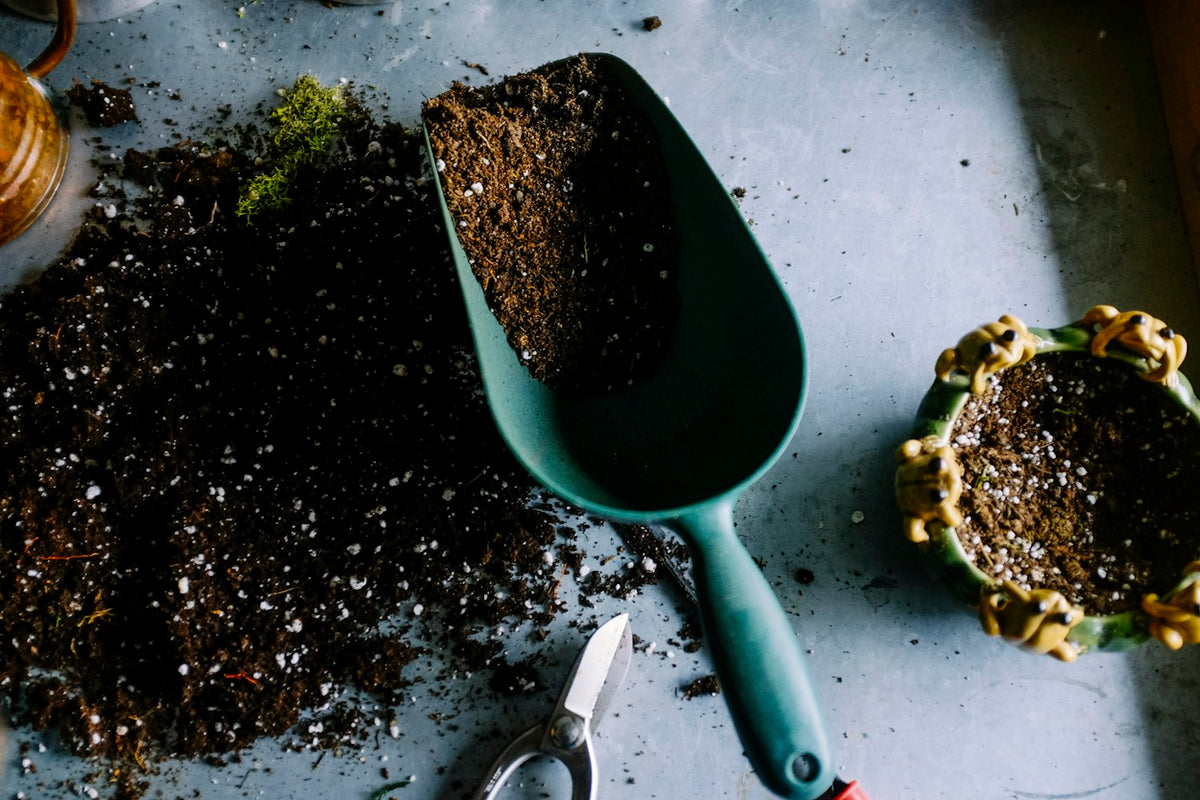
A good potting mix gives roots a balance of moisture, air and physical support. Garden soil alone is often too dense for containers: it can compact, drain slowly and leave little air around the roots. Instead of relying on one universal recipe, learn what each ingredient does and adjust the mix to the plant, pot and local conditions.
What a container mix needs to do
- Hold moisture: roots need access to water between watering sessions.
- Drain excess water: saturated roots can become stressed and oxygen-starved.
- Stay airy: pore spaces allow oxygen to reach roots.
- Provide support: the plant should remain stable as it grows.
- Support nutrition: organic matter and appropriate fertiliser can contribute nutrients over time.
Understand common ingredients
Cocopeat helps retain moisture and makes mixes lighter, but it should be prepared and used appropriately. Compost or vermicompost adds organic matter and contributes nutrients; it is an amendment, not necessarily the entire growing medium. Perlite, pumice or coarse materials can improve aeration and drainage. Composted bark or other stable organic components can add structure, depending on the plant and availability.
Build a starting mix
For many general-purpose container plants, start with a quality potting base, add a moisture-retaining component such as cocopeat, include an aeration component and incorporate a modest amount of mature compost or vermicompost. There is no single ratio that suits every plant or material. Fine cocopeat, coarse cocopeat, compost maturity and particle size all affect the final behaviour.
For succulents and cacti, use a much faster-draining, mineral-rich mix. For moisture-loving foliage plants, a mix that retains more moisture may be suitable, provided it still has air spaces and drains freely.
Test before filling every pot
Dampen a small batch and squeeze it gently. It should hold together lightly but should not become a sticky, dense lump. Put some in a pot with drainage holes and water it. Water should move through rather than sit on the surface for a long time. Observe how quickly the mix dries in your actual growing conditions and adjust the next batch if needed.
Common potting mix mistakes
- Using heavy garden soil by itself in small containers.
- Adding too much fine material and reducing airflow.
- Using immature compost that may heat or smell.
- Assuming more fertiliser always means healthier plants.
- Using the same moisture level for succulents and tropical foliage plants.
When should you refresh the mix?
Consider refreshing or replacing the mix when it has compacted, drains poorly, breaks down or no longer supports healthy growth. Repot when the plant and season are suitable, and avoid disturbing roots unnecessarily. Always use a clean container and remove diseased or rotten roots with clean tools.
Frequently asked questions
Can I use cocopeat alone?
Cocopeat can be useful, but alone it may not provide the structure, aeration and nutrition needed by many plants. Blend it with suitable components for the species.
Can vermicompost replace potting mix?
No. It is generally used as an amendment in a broader growing medium. Using it alone can create an unsuitable texture and nutrient concentration for many container plants.
Explore soil and growing-medium essentials
Browse our solid fertilisers and soil amendments, explore liquid plant nutrition, and find plants for your home or garden. Select components according to the drainage and moisture needs of the plants you grow.
Shop the ingredients for your potting mix
Build your mix with Cocopeat for moisture retention, Perlite to improve aeration, and a modest amount of Vermicompost for organic matter. You can also use Potting Soil as a base, then adapt the blend to the plant’s needs.